
 English
 Español
The Inca Trail has a dry season from April to October and a rainy season from November to March. The driest months are May to September, when Machu Picchu gets less than 80 mm of rain a month. January and March are the wettest months the trail is open, and the whole trail closes every February for maintenance.
Ready to see it for yourself?
Hike the Inca Trail with Sakura Expedition, with permits, campsites and local guides arranged for you.
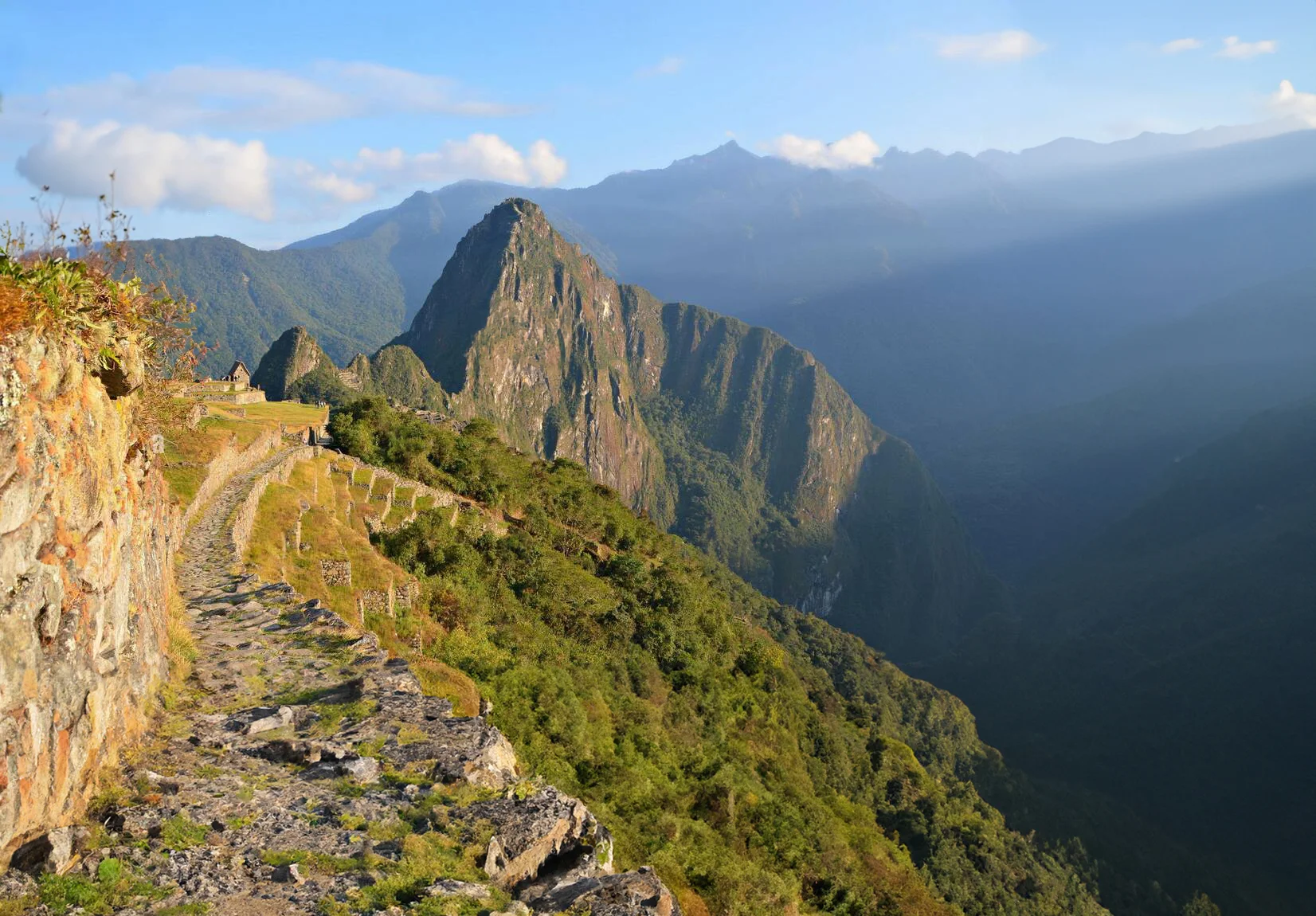
Inca Trail weather by month
The figures below are the official 1991–2020 averages from SENAMHI, the Peruvian weather service, for its Machu Picchu station at 2,399 m. That is the end of the trail and its lowest, warmest part.
| Month | Average rain | Day high / night low | On the trail |
|---|---|---|---|
| January | 341 mm | 21 / 12 °C | Open, very wet |
| February | 325 mm | 21 / 12 °C | Closed for maintenance |
| March | 341 mm | 21 / 12 °C | Reopens on 1 March, still very wet |
| April | 184 mm | 22 / 12 °C | Rain easing, busy season begins |
| May | 73 mm | 22 / 11 °C | Dry season |
| June | 51 mm | 22 / 10 °C | Driest month, cold nights |
| July | 54 mm | 22 / 9 °C | Dry, coldest nights |
| August | 61 mm | 23 / 10 °C | Dry |
| September | 76 mm | 23 / 11 °C | Dry, warmest days |
| October | 163 mm | 23 / 12 °C | Showers return |
| November | 173 mm | 23 / 12 °C | Rainy season starts |
| December | 275 mm | 21 / 12 °C | Wet |
How the weather changes along the trail
The Classic Inca Trail climbs from about 2,700 m at Km 82 to Dead Woman’s Pass, at about 4,200 m, and ends at Machu Picchu. Every day brings a different altitude, so the temperature changes more from day to day than from month to month. These are the ranges on our 4-day itinerary:
| Day | Highest point | Daytime | Night |
|---|---|---|---|
| Day 1 | Wayllabamba, 3,000 m | 18 to 20 °C | 5 to 8 °C |
| Day 2 | Dead Woman’s Pass, about 4,200 m | 13 to 23 °C | 4 to 12 °C |
| Day 3 | Runkurakay, 3,900 m | 15 to 22 °C | 0 to 5 °C |
| Day 4 | Wiñay Wayna, 2,680 m | 20 to 24 °C | — |
The pass is where you feel the cold and the wind most, so keep a warm layer at the top of your pack on day 2.
Dry season: April to October
This is when most people hike. From May to September the trail is at its driest, the stone steps are firmer underfoot and the views of the peaks are clearer. The trade-off is the cold: nights at the higher camps can fall close to 0 °C, especially in June and July. April to September are also the busiest months, so permits go first. Check dates on our Inca Trail permits and availability page.
April and October sit between seasons. Rain at Machu Picchu is more than double that of the driest months, but showers usually come and go.
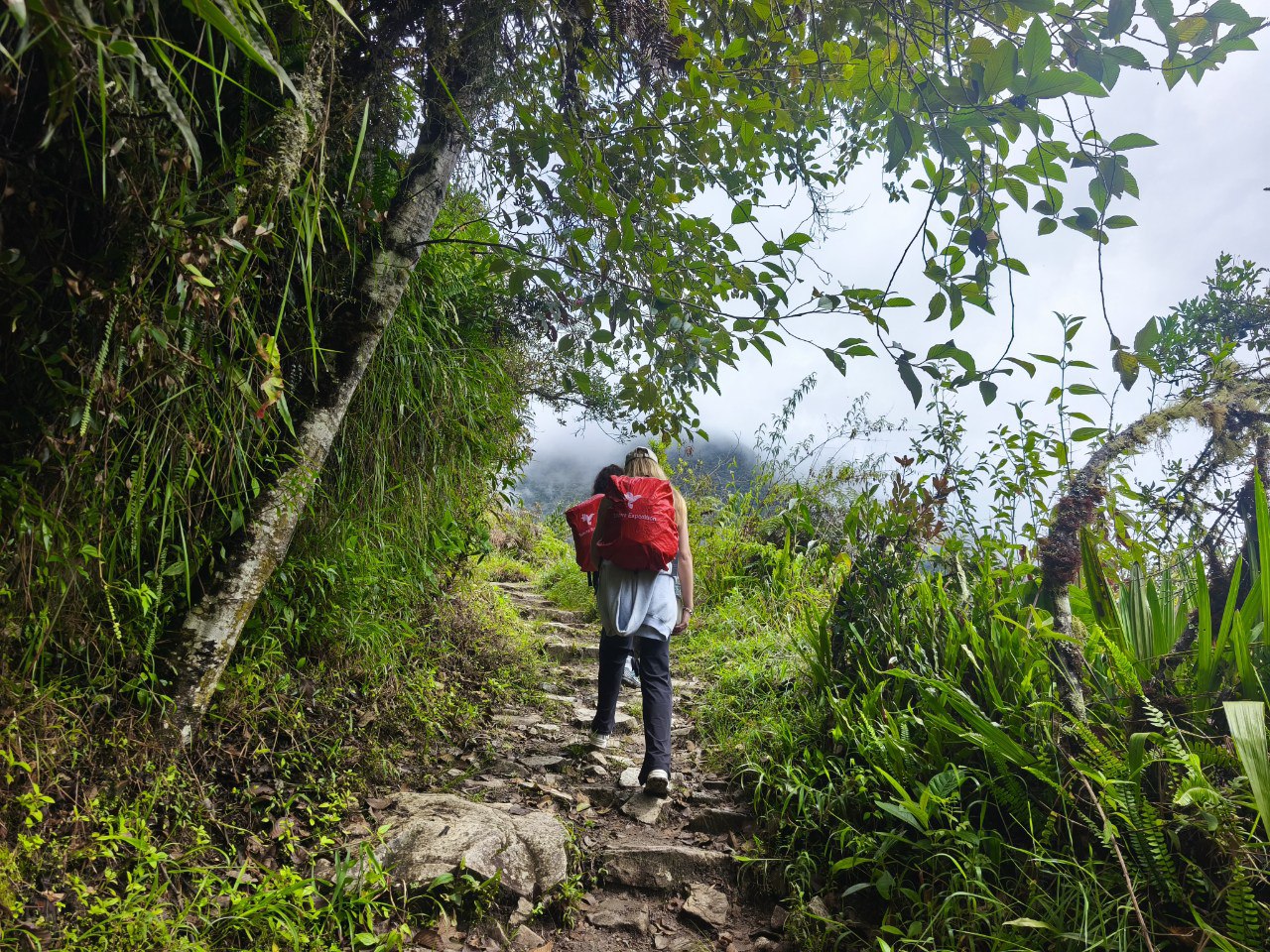
Rainy season: November to March
The trail stays open in November, December, January and March. Expect rain on many days, clouds over the peaks and wet, slippery stone steps, but also the greenest scenery of the year and milder nights. January and March are the wettest open months, with around 340 mm of rain at Machu Picchu. Good waterproofs and a slower pace on the descents make a big difference. Our guide to the rainy season in Cusco explains what to expect in the rest of the region.
Why the Inca Trail closes in February
The whole Inca Trail, including the short route, closes every February for maintenance and conservation work on the path and the archaeological sites. It falls in the middle of the rainy season and officially reopens on 1 March. Machu Picchu itself stays open, so in February you can still reach it by train or compare other treks in our Salkantay vs Inca Trail guide.
Best time to hike the Inca Trail
- For dry weather: May to September.
- For a balance of weather and greenery: April or October, with some showers.
- For milder nights: November, December, January or March, if you can handle the rain.
- Avoid: February, when the trail is closed.
For the citadel alone, see the best time to visit Machu Picchu or our month guide to Machu Picchu in January.
Short Inca Trail weather
The Short Inca Trail starts at Km 104, at 2,170 m, and its highest point is the Sun Gate, at 2,720 m. It stays low, in the cloud forest, with temperatures between about 8 and 26 °C and no nights in a tent. Its weather is close to Machu Picchu’s, so the monthly table above applies almost directly.
What to pack for the weather
- A rain jacket or poncho in any month: it can rain at any time of year.
- Warm layers and a hat for the pass and the camps, above all from May to September.
- A sleeping bag rated for temperatures close to freezing on the 4-day trek.
- Waterproof covers for your pack and spare clothes in the rainy season.
- Sun protection: the sun is strong at altitude, even on cool days.
- Insect repellent for the lower, humid sections near Machu Picchu.
Climate data: SENAMHI 1991–2020 normals for the Machu Picchu station. Day temperatures: Sakura Expedition itineraries. Reviewed on 27 November 2026.
Frequently asked questions
What is the weather like on the Inca Trail?
It depends on the season and the altitude. Days are usually mild, from about 13 to 24 °C, while nights at the higher camps can fall close to 0 °C. From November to March it rains often.
What is the best month to hike the Inca Trail?
May to September are the driest months. June and July have the coldest nights; April and October are a good middle ground.
Is the Inca Trail open in February?
No. The whole trail closes every February for maintenance and reopens on 1 March. Machu Picchu stays open.
How cold does it get at night on the Inca Trail?
At the higher camps, nights can fall to between 0 and 5 °C, especially in June and July.
Does it rain on the Inca Trail in the dry season?
It can. Even in the driest months Machu Picchu averages 50 to 80 mm of rain a month, so always carry a rain jacket.
Can you hike the Inca Trail in the rainy season?
Yes, in November, December, January and March. Expect rain, clouds and slippery steps, and pack good waterproofs.
What is the weather like at Dead Woman’s Pass?
It is the highest and coldest point of the trek, at about 4,200 m. Temperatures drop noticeably, so bring a warm layer for the top.
Ready to see it for yourself?
Walk the four days to Machu Picchu with campsites, meals and local guides included.